
Introduction
Health insurance is one of the most important financial investments you can make in the United States. Medical treatments, emergency care, surgeries, and prescription medications can cost thousands of dollars without insurance. Choosing the right health insurance plan helps protect your finances while ensuring you receive quality healthcare when needed.
With so many insurance companies and plan types available, selecting the best option can feel overwhelming. Some plans offer lower monthly premiums but higher deductibles, while others provide extensive coverage with higher monthly costs.
This guide explains how health insurance plans work in the USA, compares different plan types, highlights leading insurance providers, and helps you choose the best plan for your healthcare needs in 2026.
What Is Health Insurance?
Health insurance is a contract between you and an insurance company. In exchange for a monthly premium, the insurer helps pay for covered medical expenses, including:
- Doctor visits
- Hospital stays
- Emergency care
- Prescription medications
- Preventive care
- Mental health services
- Laboratory tests
- Maternity care
- Specialist consultations
Without health insurance, even a short hospital stay could cost tens of thousands of dollars.
Why Health Insurance Matters
Health insurance offers several benefits beyond simply covering medical bills.
Financial Protection
Healthcare in the United States is expensive. Insurance prevents unexpected medical costs from becoming overwhelming debt.
Access to Better Healthcare
Most insurance plans provide access to networks of qualified doctors, hospitals, and specialists.
Preventive Care
Many plans cover annual checkups, vaccinations, and screenings at little or no additional cost.
Peace of Mind
Knowing you’re covered during emergencies reduces financial stress.
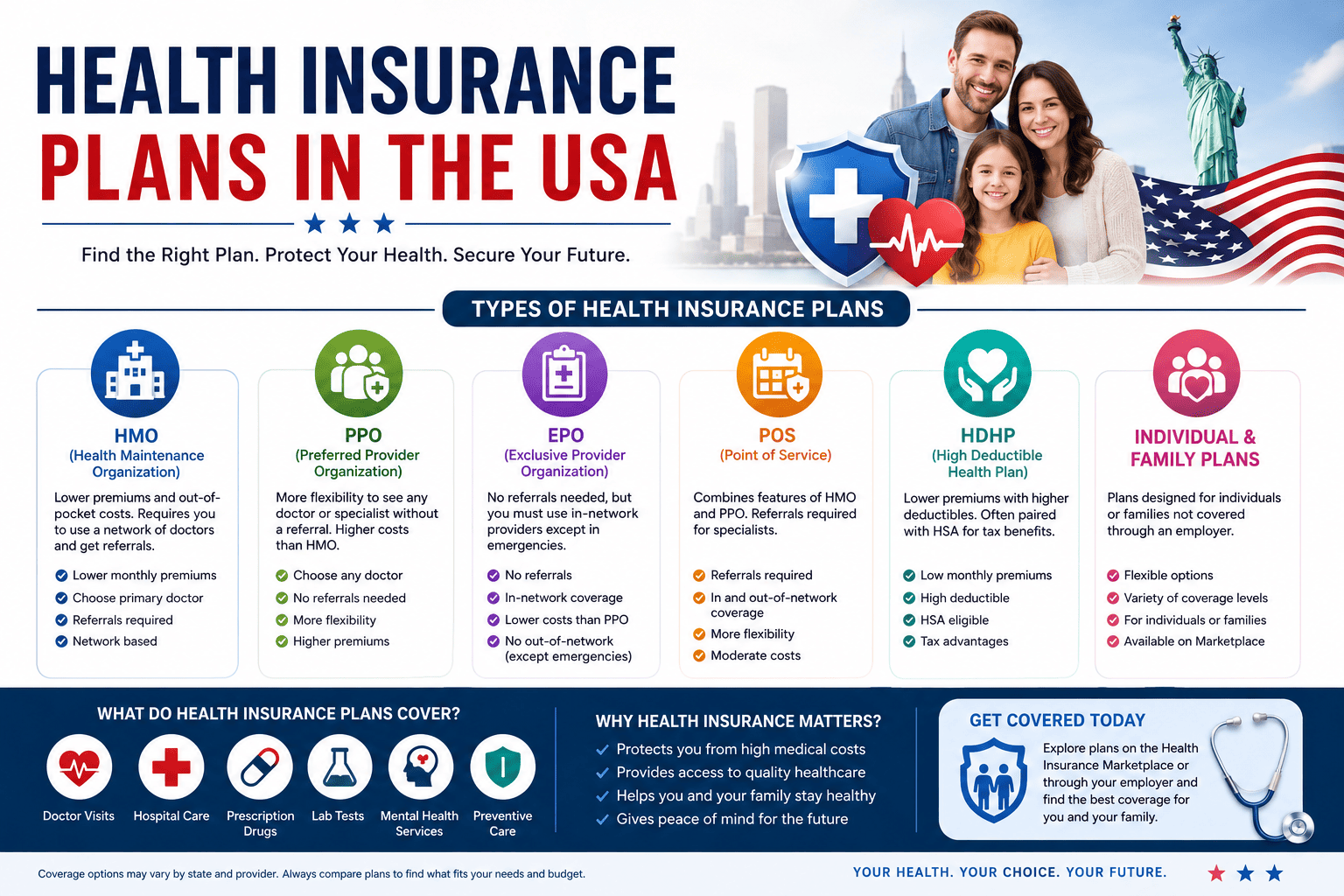
Types of Health Insurance Plans in the USA
Understanding the different plan types helps you choose wisely.
1. HMO (Health Maintenance Organization)
Advantages
- Lower monthly premiums
- Lower out-of-pocket costs
- Coordinated healthcare
Disadvantages
- Limited provider network
- Requires referrals for specialists
Best for:
Individuals looking for affordable healthcare with predictable costs.
2. PPO (Preferred Provider Organization)
Advantages
- Larger provider network
- No referrals required
- Greater flexibility
Disadvantages
- Higher premiums
- Higher deductibles
Best for:
Families and individuals wanting more provider choices.
3. EPO (Exclusive Provider Organization)
Advantages
- Lower premiums than PPO
- No referral requirements
Disadvantages
- Must stay within the network
Best for:
People comfortable using a specific healthcare network.
4. POS (Point of Service)
Advantages
- Mix of HMO and PPO features
- Some out-of-network coverage
Disadvantages
- Requires referrals
- More paperwork
Best for:
Individuals wanting moderate flexibility.
5. High Deductible Health Plan (HDHP)
Advantages
- Low monthly premiums
- Can be paired with an HSA
Disadvantages
- High deductible before insurance pays
Best for:
Healthy individuals with minimal healthcare needs.
Comparison of Health Insurance Plan Types
| Plan Type | Premium | Flexibility | Referral Needed | Out-of-Network Coverage |
| HMO | Low | Low | Yes | No |
| PPO | High | Excellent | No | Yes |
| EPO | Medium | Moderate | No | No |
| POS | Medium | Good | Yes | Partial |
| HDHP | Lowest | Depends | Varies | Depends |
Best Health Insurance Companies in the USA (2026)
Several insurers consistently rank among the top choices.
Blue Cross Blue Shield
Pros
- Available nationwide
- Large provider network
- Excellent customer satisfaction
Cons
- Premiums can be higher
Ideal for:
Families and individuals seeking nationwide coverage.
UnitedHealthcare
Pros
- Extensive provider network
- Digital healthcare tools
- Wellness programs
Cons
- Costs vary by state
Best for:
Large families and employer-sponsored plans.
Kaiser Permanente
Pros
- Outstanding preventive care
- Integrated healthcare system
- Excellent customer ratings
Cons
- Limited availability
Best for:
Residents in states where Kaiser operates.
Aetna
Pros
- Affordable premiums
- Large pharmacy network
- Strong Medicare plans
Cons
- Limited availability in some regions
Best for:
Individuals seeking budget-friendly options.
Cigna Healthcare
Pros
- Global healthcare services
- Excellent telehealth
- Strong customer support
Cons
- Limited marketplace availability
Best for:
Frequent travelers and professionals.
Health Insurance Company Comparison
| Company | Provider Network | Affordability | Customer Service | Digital Experience |
| Blue Cross Blue Shield | Excellent | Good | Excellent | Very Good |
| UnitedHealthcare | Excellent | Good | Very Good | Excellent |
| Kaiser Permanente | Excellent | Very Good | Excellent | Excellent |
| Aetna | Very Good | Excellent | Good | Very Good |
| Cigna | Very Good | Good | Excellent | Excellent |
Individual vs Employer Health Insurance
Employer Plans
Advantages
- Employer pays part of premium
- Better coverage
- Lower costs
Disadvantages
- Limited plan options
- Ends if employment changes
Individual Plans
Advantages
- Choose your own insurer
- Flexible coverage
- Marketplace subsidies available
Disadvantages
- Higher monthly premiums
Factors to Consider Before Buying Health Insurance
Before selecting a plan, compare:
- Monthly premium
- Deductible
- Copayments
- Coinsurance
- Annual out-of-pocket maximum
- Network hospitals
- Prescription drug coverage
- Specialist access
- Customer reviews
How to Save Money on Health Insurance
Consider these strategies:
- Compare multiple insurance companies.
- Choose an HSA-eligible plan if you’re healthy.
- Stay in-network whenever possible.
- Use preventive care services.
- Review plans annually during Open Enrollment.
Common Health Insurance Terms
Premium
The monthly amount you pay for insurance.
Deductible
The amount you pay before insurance begins sharing costs.
Copay
A fixed fee for doctor visits or prescriptions.
Coinsurance
The percentage you pay after meeting your deductible.
Out-of-Pocket Maximum
The maximum you’ll pay during a year before insurance covers 100% of eligible costs.
Who Should Choose Which Plan?
| Situation | Recommended Plan |
| Healthy young adult | HDHP |
| Family with children | PPO |
| Budget-conscious individual | HMO |
| Frequent traveler | PPO or Cigna |
| Senior citizen | Medicare Advantage |
| Self-employed | Marketplace PPO |
Frequently Asked Questions
Which health insurance plan is best?
It depends on your budget, healthcare needs, preferred doctors, and location.
Is PPO better than HMO?
PPO offers greater flexibility but costs more. HMO is generally more affordable.
What is the cheapest health insurance option?
High Deductible Health Plans (HDHPs) and some HMO plans typically have the lowest monthly premiums.
Can I change my health insurance?
Yes. You can usually switch during Open Enrollment or after qualifying life events such as marriage, childbirth, or losing employer coverage.
Final Thoughts
Choosing the right health insurance plan in the USA is about balancing affordability, coverage, and flexibility. While HMO plans are often the most cost-effective, PPO plans provide greater freedom to choose healthcare providers. Companies like Blue Cross Blue Shield, UnitedHealthcare, Kaiser Permanente, Aetna, and Cigna each offer strong options depending on your needs and location.
Before enrolling, compare premiums, deductibles, provider networks, prescription drug coverage, and customer satisfaction. Reviewing your options carefully can help you secure comprehensive healthcare protection while keeping your medical expenses under control.