
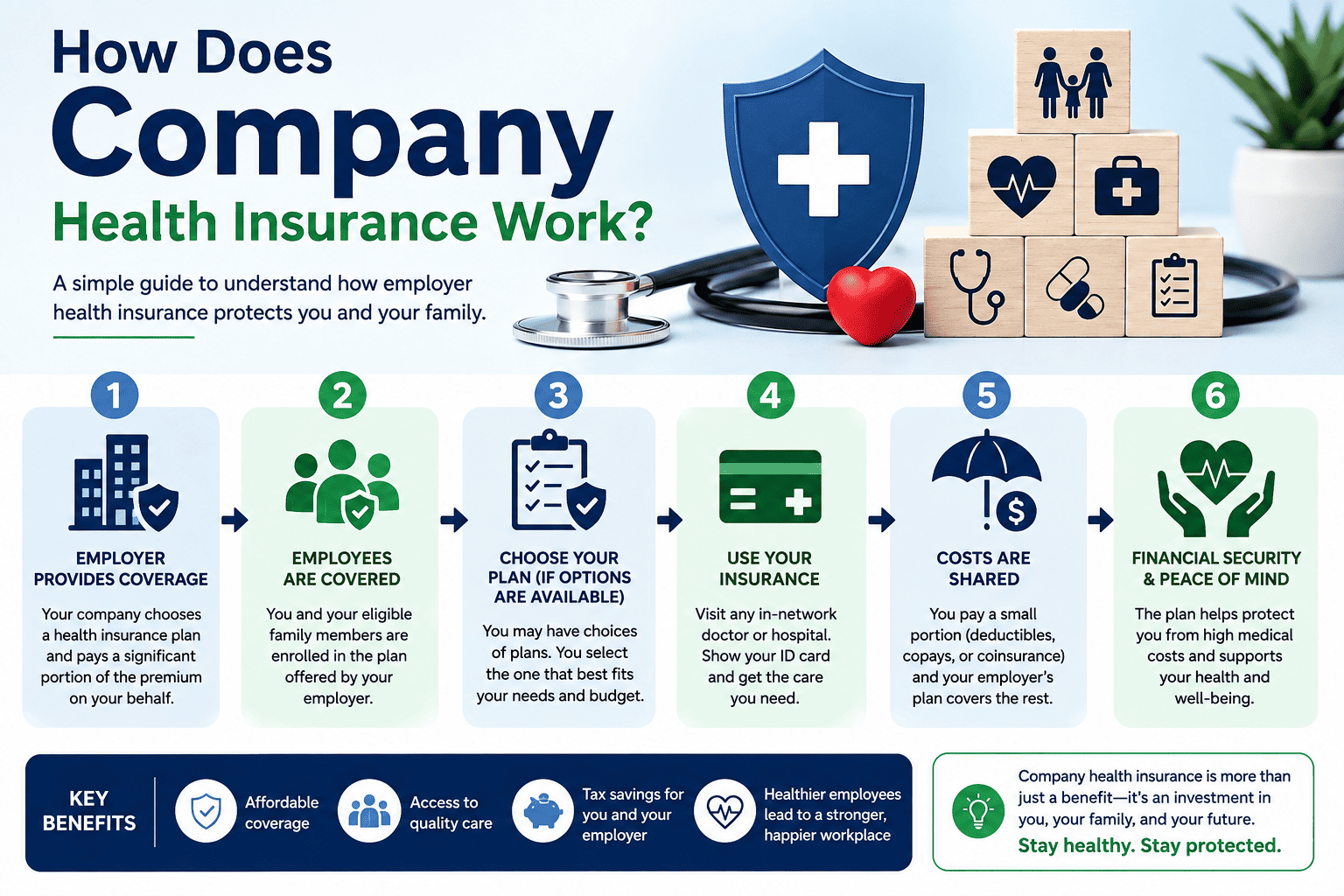
Health insurance can seem confusing at first, especially if you’re getting it through your employer. The good news is that company health insurance is one of the most affordable and convenient ways to receive medical coverage in the United States.
Whether you’re starting a new job or comparing your benefits, understanding how employer-sponsored health insurance works can help you make smarter healthcare decisions while saving money.
In this guide, we’ll explain everything in simple language, including how it works, what it covers, who pays for it, and how different plans compare.
What Is Company Health Insurance?
Company health insurance, also called employer-sponsored health insurance, is a health plan offered by employers as part of an employee benefits package.
Instead of purchasing insurance on your own, your employer partners with an insurance company to provide coverage for employees. Because companies buy coverage for groups of people, premiums are usually much lower than individual health insurance plans.
Many employers also pay a significant portion of the monthly premium, making coverage more affordable.
How Does Company Health Insurance Work?
The process is fairly straightforward.
Step 1: Employer Selects a Health Plan
The company chooses one or more health insurance plans from an insurance provider.
Examples include:
- HMO
- PPO
- EPO
- HDHP with HSA
Employees can compare available options during enrollment.
Step 2: Employee Enrolls
When hired—or during the annual open enrollment period—you choose whether to enroll.
Many employers also allow coverage for:
- Spouse
- Children
- Dependents
Step 3: Premium Is Shared
One of the biggest advantages is cost sharing.
Typically:
- Employer pays a large portion
- Employee pays the remaining amount through payroll deductions
For example:
| Monthly Premium | Employer Pays | Employee Pays |
| $700 | $500 | $200 |
Because payroll deductions are often made before taxes, employees can save even more.
Step 4: Use Your Insurance
Once enrolled, you receive an insurance card.
You simply show your insurance card whenever you visit:
- Doctors
- Specialists
- Hospitals
- Urgent care centers
- Pharmacies
The insurance company helps cover eligible medical expenses according to your plan.
What Does Company Health Insurance Cover?
Coverage varies by plan, but most employer-sponsored plans include:
- Doctor visits
- Emergency room care
- Hospital stays
- Preventive care
- Vaccinations
- Prescription medications
- Laboratory tests
- X-rays
- Maternity care
- Pediatric care
- Mental health services
- Physical therapy
- Preventive screenings
Some employers also include:
- Dental insurance
- Vision insurance
- Wellness programs
- Telehealth services
- Employee Assistance Programs (EAPs)
Common Costs You Should Know
Health insurance isn’t completely free. Understanding these terms helps you estimate your expenses.
Premium
The monthly amount paid to maintain your insurance.
Usually shared between employer and employee.
Deductible
The amount you pay before insurance starts covering many services.
Example:
Deductible = $1,500
You pay the first $1,500 of covered expenses before your insurance begins sharing more of the cost.
Copayment (Copay)
A fixed amount you pay for certain services.
Example:
- Primary doctor visit: $30
- Specialist: $50
Coinsurance
Instead of a fixed fee, you pay a percentage.
Example:
Insurance pays 80%.
You pay 20%.
Out-of-Pocket Maximum
This is the most you’ll pay during the year for covered healthcare services.
Once you reach this limit, the insurance company generally covers eligible costs for the rest of the plan year.
Types of Company Health Insurance Plans
Choosing the right plan depends on your healthcare needs.
1. HMO (Health Maintenance Organization)
Pros
- Lower monthly premiums
- Lower out-of-pocket costs
- Coordinated care
Cons
- Limited provider network
- Primary care physician required
- Specialist referrals needed
Best for:
Employees who want lower healthcare costs and don’t mind using a specific network.
2. PPO (Preferred Provider Organization)
Pros
- Large provider network
- No referrals required
- Greater flexibility
Cons
- Higher premiums
- Higher deductibles
Best for:
People who value flexibility and frequently visit specialists.
3. EPO (Exclusive Provider Organization)
Pros
- Lower cost than PPO
- No referrals required
Cons
- Must stay within the provider network except in emergencies
Best for:
Employees who prefer flexibility without paying PPO prices.
4. HDHP (High Deductible Health Plan)
Pros
- Lowest premiums
- HSA eligibility
- Good tax advantages
Cons
- Higher upfront medical costs
Best for:
Healthy individuals who rarely visit doctors and want to save for future medical expenses.
Comparison of Popular Company Health Insurance Plans
| Feature | HMO | PPO | EPO | HDHP |
| Monthly Premium | Low | High | Medium | Lowest |
| Deductible | Low | Medium-High | Medium | High |
| Network Flexibility | Low | High | Medium | Depends |
| Referral Required | Yes | No | No | Usually No |
| Best For | Budget-conscious employees | Families & specialists | Moderate flexibility | Healthy employees |
Advantages of Company Health Insurance
Employer-sponsored health insurance offers several important benefits.
Lower Costs
Employers often cover a large portion of the premium, making insurance much more affordable than buying it independently.
Comprehensive Coverage
Most plans include preventive care, hospitalization, prescriptions, mental health support, and more.
Tax Savings
Payroll deductions are often made before taxes, reducing taxable income.
Family Coverage
Many employers let you add spouses and dependents.
Better Financial Protection
Unexpected medical bills can quickly become overwhelming. Health insurance helps reduce the financial impact of accidents, surgeries, and serious illnesses.
Are There Any Disadvantages?
Although company health insurance has many benefits, there are some limitations.
- Limited plan choices
- Coverage may end if employment ends
- Some plans have high deductibles
- Provider networks may restrict doctor selection
- Family coverage can increase monthly costs
Understanding these factors helps you choose the plan that best fits your needs.
Can You Keep Company Health Insurance After Leaving Your Job?
In many situations, employees may temporarily continue their employer-sponsored health coverage after leaving a job through federal continuation rights (commonly known as COBRA), though they usually must pay the full premium themselves. Others may choose a new employer’s plan or purchase individual coverage through the Health Insurance Marketplace.
Tips for Choosing the Best Company Health Insurance
Before enrolling, compare each plan carefully.
Consider:
- Monthly premium
- Annual deductible
- Prescription drug coverage
- Doctor network
- Hospital access
- Specialist coverage
- Mental health benefits
- Family coverage options
- Out-of-pocket maximum
- Preventive care benefits
Choosing the cheapest plan isn’t always the best value if you expect regular medical care.
Frequently Asked Questions
Is company health insurance cheaper than buying insurance yourself?
Yes. Since employers usually pay part of the premium, employer-sponsored coverage is often less expensive than purchasing an individual policy.
Can I add my family?
Most employers allow employees to add spouses and dependent children, though this generally increases the monthly premium.
When can I enroll?
You can typically enroll when you’re first hired, during your employer’s annual open enrollment period, or after certain qualifying life events, such as marriage or the birth of a child.
What happens if I don’t use my insurance?
Even if you rarely need medical care, having insurance protects you against unexpected healthcare costs and often includes preventive services like annual checkups at little or no additional cost.
Final Thoughts
Company health insurance is one of the most valuable workplace benefits in the United States. By sharing premium costs with employers, employees gain access to affordable healthcare, preventive services, and financial protection against expensive medical bills.
When comparing plans, don’t focus only on the monthly premium. Review coverage benefits, deductibles, provider networks, prescription coverage, and out-of-pocket costs to find the option that offers the best overall value for your health and budget. Understanding how company health insurance works will help you make informed decisions and get the most from your employee benefits.