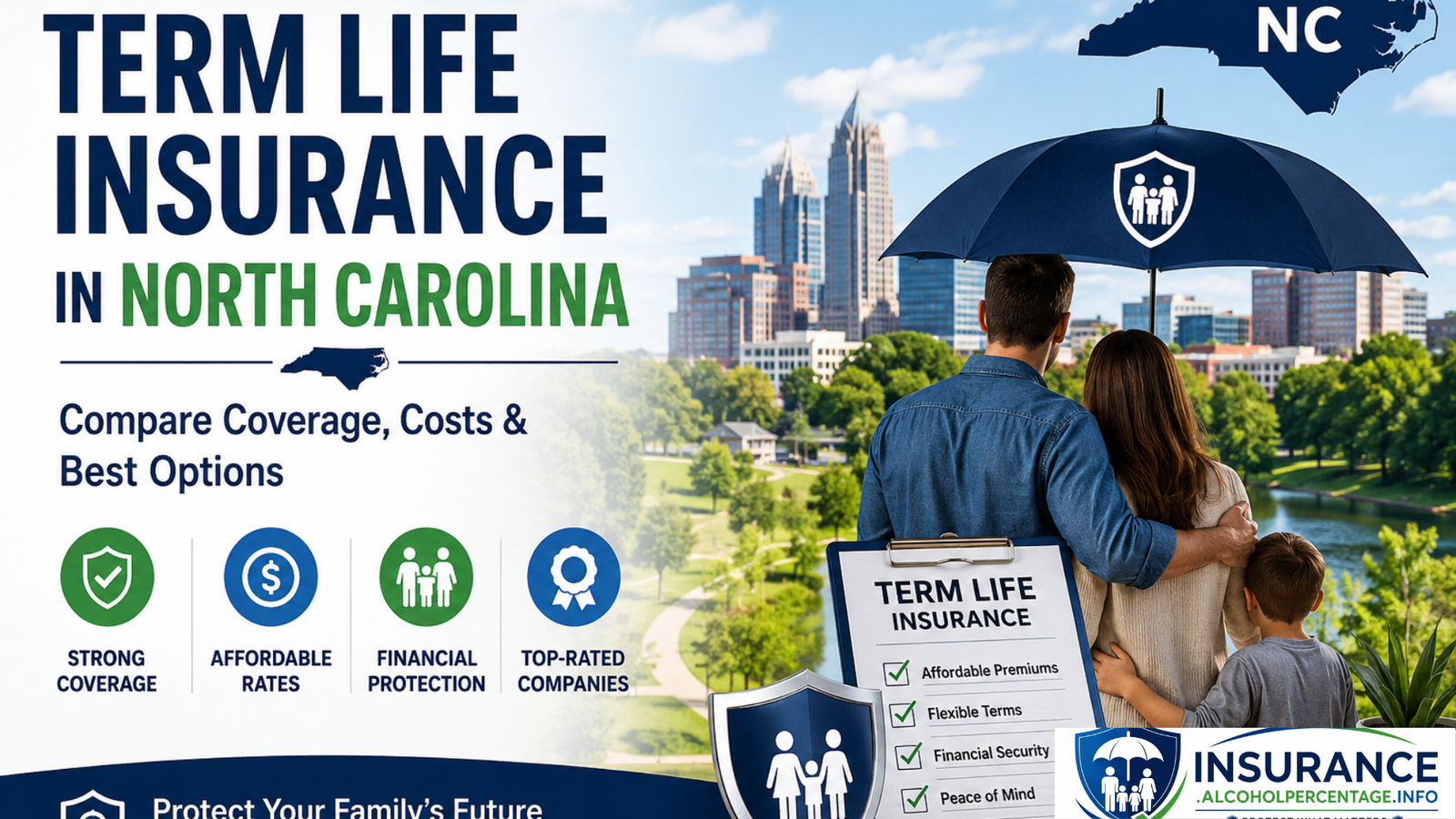
If you live in North Carolina and are looking for affordable life insurance, term life insurance in North Carolina can be one of the simplest ways to protect your family financially. Unlike permanent life insurance, term coverage is designed to provide a death benefit for a specific period, such as 10, 20, or 30 years.
For families who want substantial protection without paying for lifelong coverage, term life insurance can be an attractive option. The North Carolina Department of Insurance (NCDOI) describes term life as a straightforward form of coverage that generally does not build cash value and is suited to financial needs that may decrease over time.
If you’re ready to buy a policy, the key is not simply finding the cheapest premium. You should compare coverage amount, policy term, renewal options, conversion features, exclusions, financial strength, and the insurer’s eligibility requirements.
What Is Term Life Insurance in North Carolina?
Term life insurance provides coverage for a predetermined period. If the insured person dies while the policy is active, the insurer generally pays the policy’s death benefit to the named beneficiaries.
For example, a North Carolina parent might purchase a 20-year, $500,000 term life insurance policy to provide financial protection while children are growing up and a mortgage is being paid.
Unlike whole life insurance, traditional term insurance generally does not accumulate cash value. At the end of the term, coverage normally ends unless the policy provides a renewal or conversion option.
Why North Carolina Residents Buy Term Life Insurance
Term coverage may make sense if you want to:
- Replace income for your spouse or children
- Protect a mortgage or other major debt
- Help pay for children’s education
- Cover final expenses
- Protect a family-owned business
- Provide financial security while your children are dependent on you
- Lock in coverage during your highest-income working years
The amount and length of coverage should be based on your family’s actual financial needs rather than an arbitrary number. NCDOI recommends determining how much your dependents would need and comparing policies from multiple companies.
Term Life Insurance vs. Whole Life Insurance in North Carolina
One of the most important buying decisions is choosing between term and permanent coverage.
| Feature | Term Life Insurance | Whole Life Insurance |
| Coverage period | Specific term | Generally lifetime |
| Initial premium | Usually lower | Usually higher |
| Cash value | Generally none | Yes |
| Death benefit | During covered term | Generally lifelong if requirements are met |
| Best for | Temporary financial protection | Long-term/lifetime needs |
| Flexibility | Often offers renewal/conversion options | Permanent policy structure |
| Budget-friendly for large coverage | Often yes | Usually more expensive |
Term insurance generally offers lower premiums in the early years and can provide significant protection for a specific period. Whole life, by contrast, is a permanent policy that can include cash-value features.
Buyer tip: If your primary goal is getting a large amount of coverage at a manageable premium, compare term policies first. If you need lifelong protection and value cash accumulation, permanent insurance may deserve consideration.
Types of Term Life Insurance Available
North Carolina’s insurance guidance identifies three major forms of term insurance:
1. Level Term Life Insurance
The death benefit remains the same throughout the term, and premiums typically remain level as well. This is often the easiest option for families who want predictable coverage.
2. Increasing Term Life Insurance
The death benefit increases according to the policy’s schedule, and premiums generally increase along with the benefit.
3. Decreasing Term Life Insurance
The death benefit decreases over time while premiums may remain constant. This type can be designed for obligations that decline, such as certain mortgage-related needs.
For many buyers comparing policies online, level term life insurance is a useful starting point because it makes it easier to understand how much protection you’re purchasing and what you’re paying.
How Much Term Life Insurance Do You Need?
There is no single coverage amount that works for every North Carolina household.
Start by calculating:
Coverage needed = debts + future financial goals + income replacement + final expenses − available assets and existing coverage
Consider your:
- Annual income
- Mortgage balance
- Car loans and credit obligations
- Number and age of dependents
- Childcare and education expenses
- Spouse’s income
- Existing life insurance
- Savings and investments
- Expected retirement needs
For example, a household with young children and a large mortgage may need significantly more coverage than a single person with no dependents.
The National Association of Insurance Commissioners (NAIC) similarly recommends considering income replacement, debts, ongoing household expenses, childcare, education, and other financial obligations when determining coverage.
How Much Does Term Life Insurance Cost in North Carolina?
There is no universal price for term life insurance. Your premium can depend on factors such as:
- Age
- Health
- Tobacco or nicotine use
- Coverage amount
- Policy term
- Occupation
- Lifestyle
- Medical history
- Underwriting results
- Policy features and riders
Generally, younger and healthier applicants can qualify for lower premiums than older applicants or applicants with significant health risks.
Rather than relying on an advertised price, request personalized quotes from several insurers. NCDOI specifically advises consumers to shop around and compare similar products from different companies.
Compare Term Life Insurance Before You Buy
Price is important, but it should not be your only comparison point.
| What to Compare | Why It Matters |
| Monthly/annual premium | Determines affordability |
| Death benefit | Determines financial protection |
| Term length | Determines how long coverage lasts |
| Renewal provision | Can help you maintain coverage after the initial term |
| Conversion option | May allow conversion to permanent insurance |
| Underwriting | Affects eligibility and pricing |
| Riders | Can add additional benefits |
| Company financial strength | Important for long-term confidence |
| Customer service | Useful when managing beneficiaries or claims |
| Policy exclusions | Helps you understand limitations |
NCDOI specifically recommends comparing products, costs, benefits, and the differences between guaranteed and non-guaranteed policy values where applicable. It also advises consumers to verify that the insurer and agent are licensed in North Carolina.
Renewable vs. Convertible Term Life Insurance
These features can become particularly important when comparing policies.
Guaranteed renewable can allow you to renew your policy without proving insurability again. However, renewal premiums can be higher.
A conversion privilege can allow you to convert qualifying term coverage to permanent insurance without proving insurability, subject to the policy’s specific terms and deadlines.
If you’re young and healthy today but want flexibility later, a policy with a strong conversion provision may be worth comparing even if another policy has a slightly lower initial premium.
Who Should Consider Term Life Insurance in North Carolina?
Term life insurance may be a strong choice for:
Young Families
Parents can use term coverage to protect income and household expenses while children are financially dependent.
Homeowners
A term policy can provide money that beneficiaries could use toward a mortgage or other debts.
Business Owners
Business owners may need coverage to help protect business obligations or provide financial support to surviving partners and family members.
Single Parents
A life insurance benefit can help provide financial resources for children if the parent dies during the policy term.
People With Employer Life Insurance
Employer-provided coverage may not be enough, and it may not follow you if you change jobs. A personal term policy can provide additional protection.
How to Buy Term Life Insurance in North Carolina
The buying process is relatively straightforward:
1. Calculate your coverage needs.
Determine how much money your beneficiaries would need if you died.
2. Choose the policy term.
Common choices include 10, 20, and 30 years, depending on the insurer and applicant.
3. Compare multiple insurers.
Get quotes for similar coverage rather than comparing unrelated policies.
4. Check the insurer’s credentials.
NCDOI recommends verifying that the company and agent are licensed to do business in North Carolina.
5. Review the policy details.
Pay attention to renewal, conversion, exclusions, riders, premiums, and beneficiary provisions.
6. Complete the application accurately.
Do not guess or intentionally leave out medical or lifestyle information. NCDOI warns that inaccurate application information can create serious policy issues.
7. Review the policy after delivery.
North Carolina provides a minimum 10-day free-look period for new policies, allowing the buyer to return the policy for a full premium refund. Replacement policies have a longer minimum free-look period under the state’s consumer guidance.
What Happens If You Miss a Premium?
North Carolina life insurance policies provide a minimum 31-day grace period after the premium due date. During the grace period, the policy generally remains in force; if the premium is not paid before the grace period ends, the policy can lapse.
Still, don’t rely on the grace period. Setting up automatic payments can help prevent an accidental lapse in coverage.
Common Mistakes to Avoid
Before purchasing term life insurance in North Carolina, avoid these mistakes:
- Choosing a policy only because it has the lowest advertised premium
- Buying too little coverage
- Selecting a term that ends before your major financial obligations
- Ignoring renewal premiums
- Overlooking conversion provisions
- Failing to compare multiple insurers
- Providing incomplete information on the application
- Forgetting to update beneficiaries after major life events
- Canceling an existing policy before replacement coverage is active
NCDOI advises consumers not to feel pressured into a quick decision and emphasizes that life insurance is a long-term contract.
Frequently Asked Questions
Is term life insurance worth it in North Carolina?
For many people, yes. It can provide substantial financial protection for a defined period at generally lower early premiums than permanent insurance. Whether it is right for you depends on your family’s financial needs and budget.
What is the best term life insurance in North Carolina?
There is no single best policy for everyone. The right choice depends on your age, health, desired coverage, term length, budget, and preferred policy features. Compare multiple licensed insurers before buying.
Can I get a 20-year term life insurance policy in North Carolina?
Yes, 20-year terms are a common type of term coverage, although availability and eligibility vary by insurer. NAIC notes that term policies are commonly offered for periods such as 10 or 20 years and may also be available for other durations.
Does term life insurance build cash value?
Generally, no. Traditional term life insurance is designed primarily to provide a death benefit during the specified term rather than accumulate cash value.
Should I buy term or whole life insurance?
Choose based on your goal. Term life may be better for affordable temporary protection, while whole life may be more appropriate if you specifically need permanent coverage and cash-value features.
Final Thoughts: Finding the Right Term Life Insurance in North Carolina
Buying term life insurance in North Carolina doesn’t have to be complicated. The most important step is matching the policy to your family’s financial responsibilities.
For many buyers, a level term policy with an appropriate death benefit and a term that matches major financial obligations can be a practical starting point. But don’t choose solely on price. Compare premiums, coverage, renewal terms, conversion privileges, exclusions, riders, and the insurer’s credentials.
The North Carolina Department of Insurance recommends shopping around, comparing products and costs, and verifying that the insurer and agent are licensed in the state.