
Choosing the right health insurance plan is one of the most important financial decisions you’ll make. A good plan protects you from unexpected medical expenses while ensuring access to quality healthcare. However, with dozens of insurance companies and hundreds of policy options available in the United States, comparing health insurance plans can feel overwhelming.
The truth is that the cheapest plan isn’t always the best. Likewise, the most expensive policy doesn’t always provide the best value. The key is finding a balance between monthly premiums, deductibles, coverage benefits, and out-of-pocket costs.
In this comprehensive guide, we’ll compare different types of health insurance plans, explain important insurance terms, compare costs and premiums, and help you choose the best health insurance plan for your needs in 2026.
Why Comparing Health Insurance Plans Matters
Many Americans simply renew their existing policy every year without reviewing other options. Unfortunately, this could mean paying hundreds—or even thousands—of dollars more than necessary.
Comparing health insurance plans allows you to:
- Save money on monthly premiums
- Find lower deductibles
- Access better healthcare providers
- Get improved prescription drug coverage
- Reduce annual medical expenses
- Receive better preventive care benefits
Even small differences in plan design can have a significant financial impact throughout the year.
Understanding Health Insurance Costs
Before comparing plans, it’s essential to understand the major costs involved.
Monthly Premium
Your premium is the amount you pay every month to keep your insurance active.
Lower premiums usually mean:
- Higher deductibles
- Higher out-of-pocket expenses
- More limited coverage
Higher premiums often include:
- Better benefits
- Lower deductibles
- Smaller copays
- Reduced financial risk
Deductible
The deductible is the amount you pay before your insurance starts covering most healthcare costs.
Example:
- Annual deductible: $2,000
- You pay the first $2,000 in covered medical expenses.
- After reaching the deductible, your insurance begins sharing costs.
Copayment (Copay)
A copay is a fixed amount you pay for medical services.
Examples:
- Doctor visit: $25
- Specialist: $50
- Urgent care: $75
Coinsurance
Coinsurance is the percentage of medical costs you share after meeting your deductible.
Example:
Insurance pays 80%.
You pay 20%.
Out-of-Pocket Maximum
This is the maximum amount you’ll pay during the year for covered services.
Once reached, your insurance company pays 100% of covered healthcare costs.
Types of Health Insurance Plans
Understanding plan types helps you compare coverage effectively.
HMO (Health Maintenance Organization)
Pros
- Lowest premiums
- Lower copays
- Coordinated healthcare
- Affordable preventive services
Cons
- Requires primary care physician
- Specialist referrals required
- Limited provider network
Best For:
Individuals looking for lower monthly costs.
PPO (Preferred Provider Organization)
Pros
- No referral required
- Larger provider network
- Out-of-network coverage
- Greater flexibility
Cons
- Higher premiums
- Higher deductibles
Best For:
Families and individuals who want provider flexibility.
EPO (Exclusive Provider Organization)
Pros
- Lower premiums than PPO
- No referrals
- Good provider network
Cons
- No out-of-network coverage except emergencies
POS (Point of Service)
Pros
- Combination of HMO and PPO
- Primary doctor coordinates care
- Some out-of-network coverage
Cons
- Referral requirements
- Moderate premiums
Comparison of Health Insurance Plan Types
| Feature | HMO | PPO | EPO | POS |
| Monthly Premium | Lowest | Highest | Moderate | Moderate |
| Deductible | Low | High | Medium | Medium |
| Specialist Referral | Yes | No | No | Yes |
| Out-of-Network Care | No | Yes | No | Limited |
| Flexibility | Low | High | Medium | Medium |
Average Health Insurance Costs in 2026
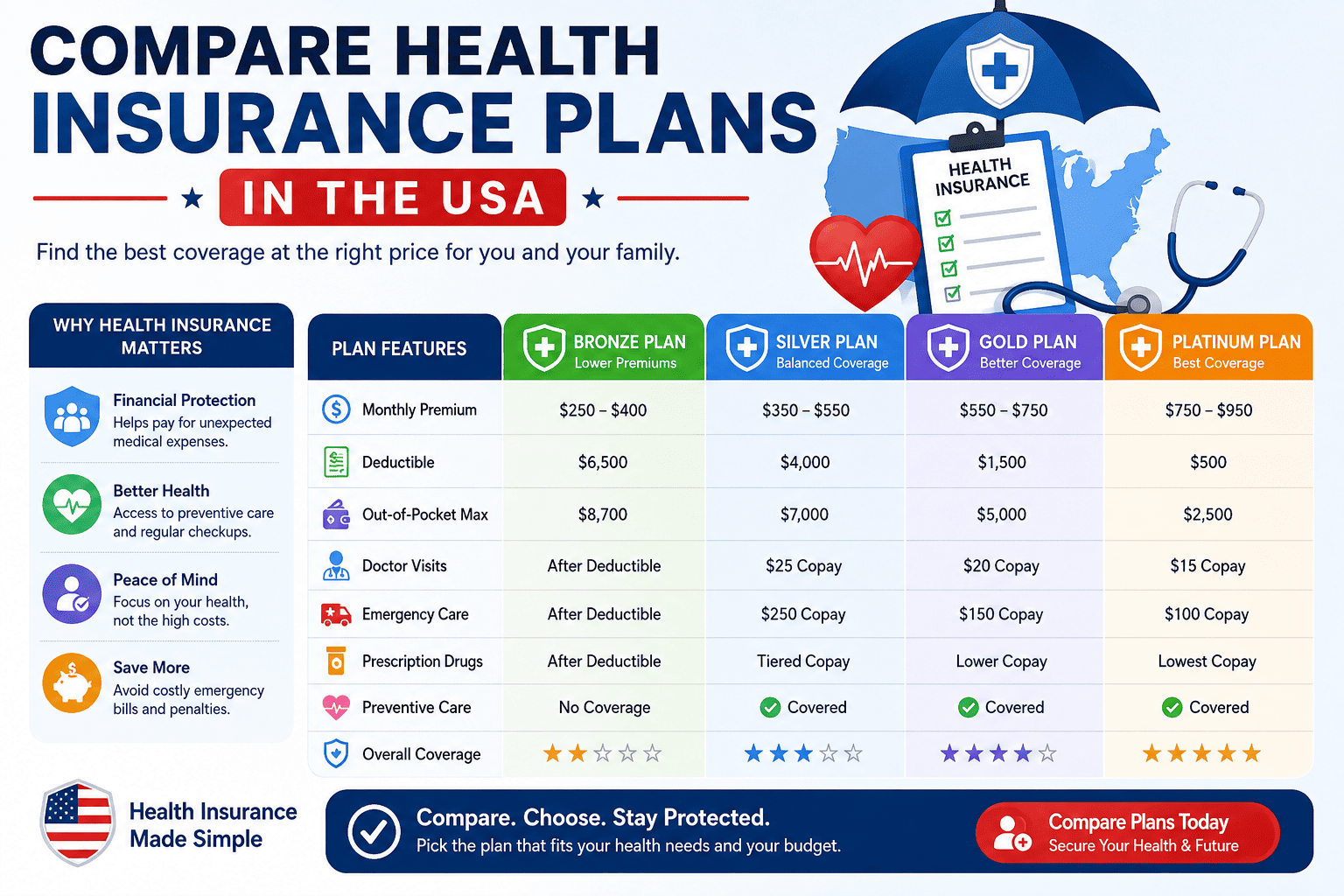
Although prices vary by state, age, and income, the average monthly premiums are approximately:
| Plan Type | Average Monthly Premium |
| Bronze | $420–$550 |
| Silver | $520–$700 |
| Gold | $700–$900 |
| Platinum | $900–$1,200 |
Remember that lower premiums often mean higher deductibles.
Comparing Bronze, Silver, Gold, and Platinum Plans
Bronze Plan
Pros
- Lowest monthly premium
- Good for healthy individuals
- Protection from catastrophic expenses
Cons
- High deductible
- Higher out-of-pocket costs
Best for:
- Young adults
- Healthy individuals
Silver Plan
Pros
- Balanced premium
- Moderate deductible
- Better value for many households
Cons
- Higher premium than Bronze
Best for:
- Average healthcare users
- Families
Gold Plan
Pros
- Lower deductible
- Lower copays
- Better coverage
Cons
- Higher monthly premium
Best for:
- Frequent doctor visits
- Chronic conditions
Platinum Plan
Pros
- Lowest out-of-pocket expenses
- Excellent coverage
- Minimal deductibles
Cons
- Highest premiums
Best for:
- Individuals with significant medical needs
Compare Health Insurance Plans in the USA: Example
Let’s compare two plans.
| Feature | Bronze Plan | Gold Plan |
| Monthly Premium | $450 | $850 |
| Annual Premium | $5,400 | $10,200 |
| Deductible | $7,000 | $1,000 |
| Specialist Visit | $90 | $35 |
| Coinsurance | 40% | 20% |
Which Is Better?
If you’re healthy and rarely visit the doctor, the Bronze Plan may save money through lower premiums.
If you have ongoing medical needs or expect frequent healthcare services, the Gold Plan can reduce your total annual costs despite its higher premium.
How to Compare Health Insurance Plans
1. Compare Monthly Premiums
Lower isn’t always better.
Consider total yearly healthcare spending.
2. Check Deductibles
A low premium paired with a very high deductible may cost more if you need medical care.
3. Review Provider Networks
Ensure your preferred:
- Doctors
- Specialists
- Hospitals
- Clinics
are included in the plan.
4. Compare Prescription Drug Coverage
If you take regular medications, review the insurer’s drug formulary to confirm your prescriptions are covered and estimate your copays.
5. Compare Preventive Care Benefits
Most plans cover preventive services such as:
- Annual physical exams
- Vaccinations
- Cancer screenings
- Wellness visits
with no additional cost when using in-network providers.
6. Review Emergency Coverage
Check:
- Emergency room costs
- Ambulance coverage
- Urgent care benefits
7. Understand Out-of-Pocket Maximums
A lower out-of-pocket maximum can protect you from very high medical bills during serious illnesses or emergencies.
Best Health Insurance Companies to Compare
When comparing plans, consider factors beyond price, including customer satisfaction, provider networks, digital tools, and claims support. Well-known insurers include:
- Blue Cross Blue Shield
- UnitedHealthcare
- Kaiser Permanente
- Aetna
- Cigna
- Humana
- Molina Healthcare
The best choice depends on your location, available networks, healthcare needs, and budget.
Tips to Save Money on Health Insurance
- Compare plans every year during Open Enrollment.
- Use in-network doctors whenever possible.
- Take advantage of free preventive care.
- Consider a higher deductible if you’re generally healthy.
- Check whether you qualify for premium tax credits or other financial assistance.
- Review employer-sponsored insurance before purchasing an individual plan.
Common Mistakes to Avoid
Avoid these common pitfalls when selecting a health insurance plan:
- Choosing a plan based only on the monthly premium
- Ignoring deductibles and out-of-pocket maximums
- Not checking whether your doctors are in-network
- Overlooking prescription drug coverage
- Failing to compare multiple plans before enrolling
- Missing enrollment deadlines
Frequently Asked Questions
Which health insurance plan has the lowest monthly premium?
Bronze plans typically have the lowest monthly premiums, but they often come with higher deductibles and greater out-of-pocket costs.
Is a higher premium always better?
No. A higher premium may provide lower deductibles and better coverage, but the best plan depends on your expected healthcare usage and financial situation.
Should I choose Bronze or Gold?
If you’re healthy and rarely need medical care, a Bronze plan may be more cost-effective. If you expect frequent doctor visits or ongoing treatment, a Gold plan may offer better overall value.
What is the most important factor when comparing plans?
Look at the total annual cost, including premiums, deductibles, copays, coinsurance, and the out-of-pocket maximum—not just the monthly premium.
Final Thoughts
Comparing health insurance plans is about more than finding the lowest premium. The best plan is the one that balances affordability with the coverage you need. By evaluating monthly premiums, deductibles, provider networks, prescription benefits, and overall out-of-pocket costs, you can make a smarter decision that protects both your health and your finances.
Whether you’re enrolling through your employer, the Health Insurance Marketplace, or a private insurer, take time to compare multiple options before making a final choice. A careful comparison today can save you money and provide greater peace of mind throughout the year.